Physical Security
.avif)


.avif)
.avif)
.avif)
Back


Crime Prevention Through Environmental Design (CPTED) aims to reduce opportunities for crime within urban areas through intentional environmental design and maintenance. CPTED is a proven method that uses design psychology and sociology to minimize theft, vandalism, vagrancy, and criminal activity while strengthening communities, improving safety, and elevating quality of life. In this blog, we’ll explore the principles of CPTED and how security guards support its core principles.
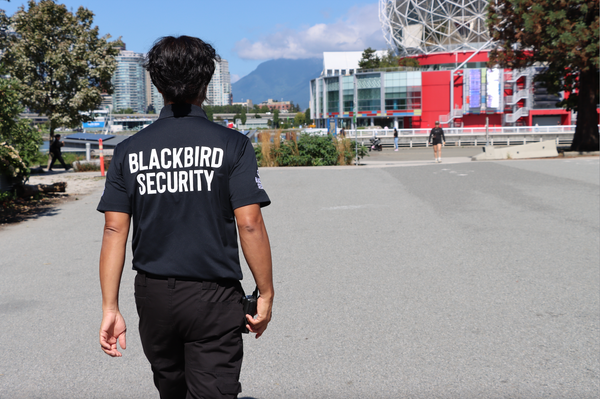
Architects and city planners implement CPTED during the design phase of building projects. However, CPTED-aligned changes can also be made to existing properties. Recommendations include planting greenery around a property, ensuring spaces are lit well, and minimizing escape routes.
An important element of CPTED is visually communicating ownership of a space. The broken windows theory of criminology states that visible evidence of crime, such as broken windows, fences in need of repair, graffiti, litter, and loitering, encourages further criminal acts. As a result, regular building and property maintenance asserts ownership over spaces and helps reduce crime.
The underlying goal of CPTED design strategies is to deter choices made by potential criminals before committing a crime. Studies on criminal behaviour show that a strong perceived risk of being caught is a stronger deterrent than the potential punishment for committing a given crime. This means that if a person thinks they can get away with committing a crime, they will—even if the punishment is severe. Through design choices that maximize visibility and person-to-person contact, CPTED deters theft and highlights the risk of being caught.
CPTED seeks to strengthen trust within society by using “natural”, unobtrusive landscaping and security features that provide choices rather than physical obstruction. Additionally, unobtrusive and aesthetically pleasing security features both promote increased social interaction between community members and improve quality of life.
Below is an overview of the three core principles of CPTED.
Natural surveillance deters criminal behaviour by increasing visibility, allowing members of the public to see and observe others in a given space. This is achieved through the strategic placement of buildings, walkways, and property features and provides a strong element of deterrence against criminal acts.
Examples of natural surveillance include:
Increasing sight lines to vulnerable areas such as stairwells, playgrounds, building access points, etc.
Maintaining hedges, trees, and other greenery.
Implementing transparent fences.
Increasing lighting in key areas while avoiding harsh spotlights that create deep shadows.
Increasing cycling and pedestrian traffic on streets.
Building curved streets that increase sightlines while minimizing escape routes.
Placing balconies and windows overlooking streets.
Natural access control limits access to a building or property through strategic design that defines boundaries between public and private spaces, decreasing opportunities for crime. Natural access control should ideally blend in with the surrounding environment. For example, a sidewalk-level townhouse should be protected by a low wall planted with greenery rather than a tall, opaque fence.
Additional examples of natural access control include:
Planting thorny or dense bushes around fences or in their place to use as a natural barrier.
Removing climbable trees that allow access to parts of the property.
Using physical space to separate distinct areas, such as a sidewalk and a house.
Clearly identifying a single, easily visible access point.
Natural territorial reinforcement is a concept in which, through the combination of natural surveillance and access control, people within a space are encouraged to feel a sense of ownership and community. This is accomplished through the distinction between public and private space and consistent property maintenance. People who feel a sense of ownership and pride over a space are more likely to notice suspicious behaviour or trespassers within private spaces and alert security guards or the police.
Examples of natural territorial reinforcement are:
Clearly defining public, semi-public, and private spaces using visual landscape details such as pavement designs and layout.
Holding private activities within private spaces.
Maintaining greenery and fences and replacing broken building features.
Keeping the area free from evidence of vandalism, graffiti, and litter.
Avoiding barbed wire fencing.

Security guards complement CPTED principles across all industries. Their presence reinforces its key components and adds an extra layer of protection to properties and businesses. Here’s how:
Security guards complement the CPTED approach by providing visual deterrence that clearly communicates the risk of capture to potential criminals. Uniformed security guards are an effective method of visual deterrence, as their distinct uniforms are easy to identify, and their presence establishes that a building is under surveillance. These guards are often either stationed at key locations, such as a building’s front entrance, or patrol throughout the property. Where natural surveillance is limited, such as properties without clear sightlines or areas such as parking garages that receive little foot traffic, patrols provide a human presence that deters criminal activity.
Additionally, CCTV cameras can further complement CPTED as an element of deterrence, as criminals are less likely to commit crimes when they are under video surveillance. Concierge or front desk security guards stationed within a property will watch live CCTV feeds, ensuring that any suspicious behaviour is addressed swiftly.
A large part of a security guard’s role is access control. Security guards control the flow of people entering a building and are a strong deterrent against trespassers. While a barbed wire fence surrounding the perimeter of a warehouse property may keep trespassers at bay, it also communicates that a site is not actively protected. A security guard stationed at a gatehouse or patrolling outside demonstrates that a property is safeguarded.
A policy of visitor reporting, typically facilitated by concierge security guards, helps promote territorial reinforcement. People who live or work in properties with high visitor traffic, such as condominiums or warehouses, are more likely to take an active role in security when they feel a sense of ownership and pride in their environment. This includes directing unfamiliar individuals to the front desk for check-in or reporting suspicious behavior to the security team.
Retail stores are designed to be more accessible to the public than residential buildings, offices, or other commercial properties. Busy shopping streets and malls also benefit from natural surveillance due to increased pedestrian activity. However, stores typically lack the element of territorial reinforcement and community seen in residential buildings, cafes, offices, and other gathering places. It’s easy for shoplifters to go unnoticed without a dedicated retail security team maintaining surveillance over the store.
For example, a store’s EAS gates might sound an alarm when an unpaid item is detected, but shoplifters are far more willing to take a chance if they are not actively watched. A security guard stationed at a store’s entrance provides a more effective means of theft prevention than unmanned security features.
Security guards regularly check for and report on maintenance issues while conducting patrols of properties, allowing issues to be quickly addressed and resolved. Guards will monitor for key issues, including leaking pipes, broken building features, malfunctioning locks, vandalism, litter, and more. A building’s upkeep is integral to both preventing crime and providing a welcoming space that visitors, residents, and guests can feel proud of.
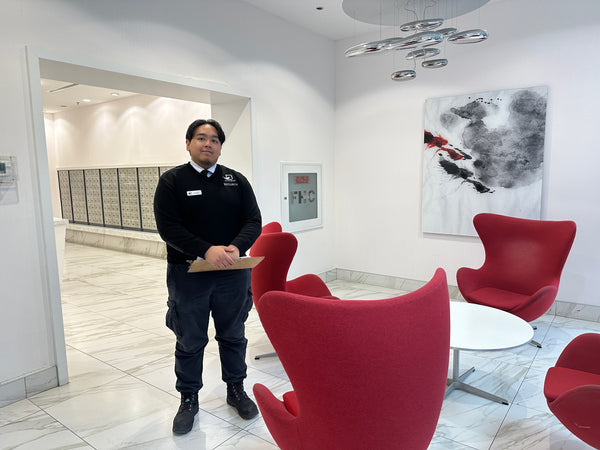
Crime Prevention Through Environmental Design (CPTED) is a highly effective strategy for reducing crime and improving public safety through intentional design. While CPTED is continually gaining traction and popularity in architecture and city planning, not every building or property is designed with it in mind. Security guards are key to not only reinforcing CPTED principles but also establishing them through real-time surveillance, visual deterrence, access control, theft prevention, community engagement and more.
At Blackbird Security, we understand that integrating security teams with proven crime prevention frameworks is essential to promoting safety. Our team is highly trained in protective measures for sites across every industry to provide comprehensive protection. Get in touch with us through the form below to learn how we can support your security needs.