Physical Security
.avif)


.avif)
.avif)
.avif)
Back

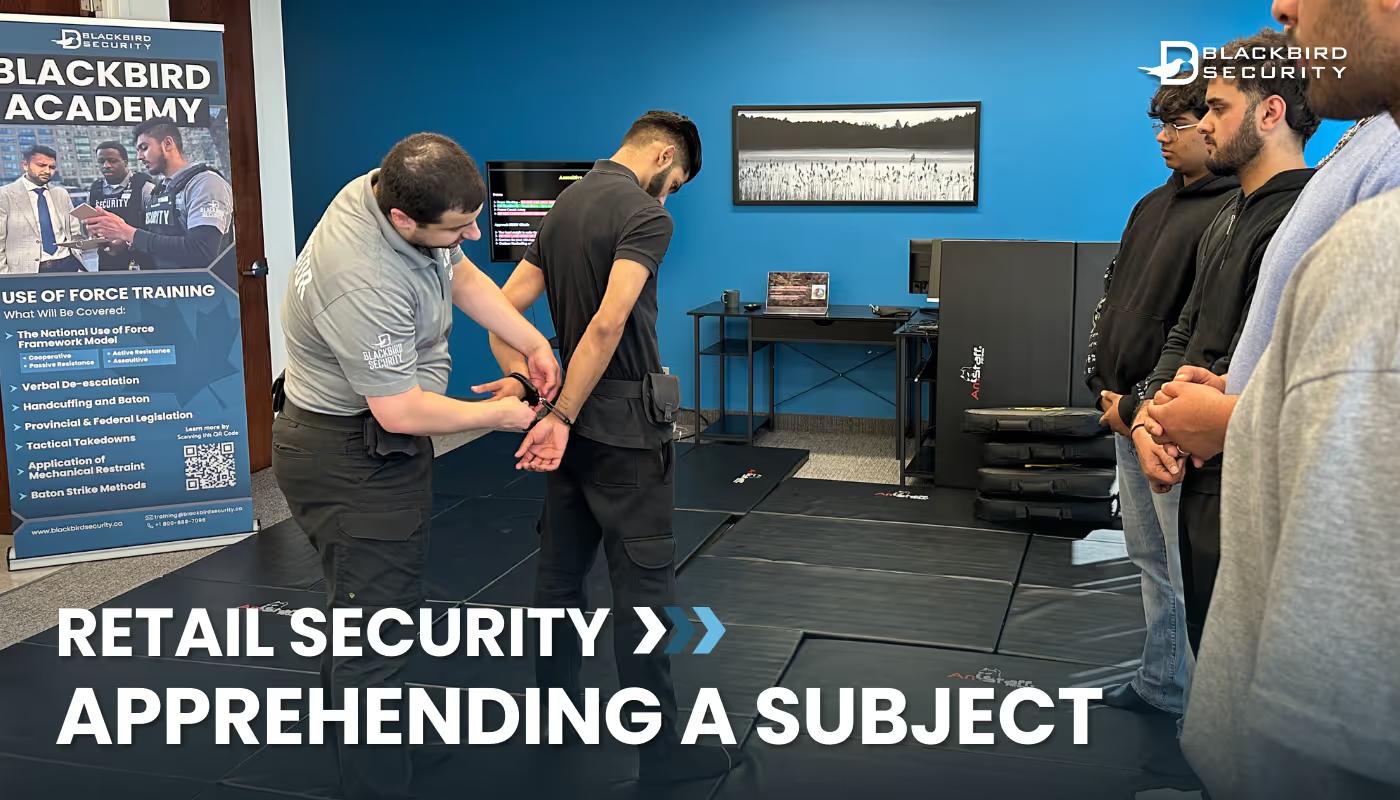
A retail security guard’s role involves both theft prevention and maintaining the safety of customers and store staff members. Occasionally, they must protect safety by taking direct action to apprehend a subject who has committed a crime. Conducting an apprehension is a complex process that requires legal knowledge, de-escalation techniques, and strict adherence to protocol. In this blog, we’ll explore how retail security guards lawfully apprehend individuals, the importance of peaceful de-escalation, and the step-by-step process they follow to ensure safety for all parties involved.
Yes. Under Canadian law, any Canadian citizen is authorized to make a citizen’s arrest when witnessing an individual committing a criminal offence or actively attempting to flee immediately after being apprehended. Security guards derive their authority to make arrests from this same legislation. It is crucial to note that anyone, including security guards, making a citizen’s arrest can be held criminally liable for the use of excessive force. Consequently, security personnel must only employ the amount of force reasonably necessary to carry out the arrest.
Additionally, in certain provinces, specific provincial acts also grant arrest powers. For example, Ontario's Trespass to Property Act (TPA) and Alberta's Trespass to Premises Act provide further provincial authority enabling arrests related to trespassing.
Retail security guards may arrest a subject if they are witnessed committing a crime, including theft, vandalism, or acts of physical violence. It’s not uncommon for security guards to encounter situations where a subject poses a physical threat to those around them, including situations where security guards are physically assaulted. In these cases, apprehension may be the best course of action.
As we’ll discuss later in this blog, security guards should prioritize peaceful de-escalation over physical force. If force is necessary, security guards must be judicious and comply with the Criminal Code of Canada to ensure their use of force is both justified and appropriate. Learn more about how security guards use force in our previous blog, Blackbird Academy: Use of Force Training for Security Guards.
At Blackbird Security, our retail security guards receive comprehensive training in Canadian criminal law and the Canadian Charter of Rights and Freedoms. Guards are trained to carefully assess situations and take appropriate action when apprehending individuals who have committed a crime on protected property. They follow strict compliance with the law, including understanding when an arrest is legally permitted and when it is not.
Blackbird Security prioritizes a culture of de-escalation. This means that our guards strive to find a peaceful solution to every conflict, including criminal ones. Our security guards employ proven techniques for peaceful verbal de-escalation, including empathy, clarification questions, active listening, clear speaking, and making sure the individual feels understood.
Maintaining safety through de-escalation should always be the priority, even when post orders or standard operating procedures (SOPs) allow for a hands-on approach. Blackbird Security guards conducting a hands-off apprehension refrain from physically engaging with subjects, handling merchandise, searching belongings, or blocking a subject’s path. This aligns with Sections 8 and 9 of the Canadian Charter of Rights and Freedoms, which protect against unreasonable searches and arbitrary detention.
In general, our security guards only use a hands-on approach in emergencies as a means of self-defence or defence on behalf of another person.
Retail security guards follow a structured approach when making an arrest to ensure safety, compliance with the law, and the protection of all parties involved. Below are the six key steps they use when apprehending a subject.
A retail security guard must first observe and clearly identify an individual committing a criminal offence. This involves careful monitoring of the individual’s actions to ensure there is clear evidence of the offence and that all legal elements, as outlined in the Criminal Code, are met. For example, in cases of theft, all elements under Section 322 must be satisfied. Similarly, other offences such as assault, fraud, or mischief must meet the criteria defined in the applicable sections of the Code before any action is taken. Guards must be certain that a criminal offence is in progress before proceeding with an arrest.
Before initiating any action, the security guard must identify themselves to the subject. Whether in uniform or working undercover, the guard must clearly state their name, role (e.g., Loss Prevention Officer), and the company they represent. This ensures transparency and establishes authority. Simultaneously, the guard should observe the suspect’s actions to confirm that a criminal offence is being committed, ensuring that all legal elements of the offence are met (e.g., under Section 322 for theft).
If the guard determines an arrest is necessary, they must give the subject clear notice of arrest. This includes stating that the individual is under arrest and specifying the reason, including the name of the offence (for example, theft, fraud, mischief, assault under the Criminal Code, or trespassing under applicable provincial legislation such as Ontario’s TPA or Alberta’s Trespass to Premises Act). The guard should communicate calmly and clearly to ensure the subject understands the reason for the arrest and encourage compliance without escalation.
If necessary, and in accordance with Sections 25 and 26 of the Criminal Code, the guard may use reasonable and justifiable force to detain the individual. Excessive force may result in criminal liability. Handcuffs or other mechanical restraints may be applied, and the subject should be escorted to a secure holding area, typically the Loss Prevention (LP) room.
While there is ongoing legal debate regarding whether private citizens must provide Rights to Counsel, it is common practice in the security industry to do so, especially if police response is delayed. Guards should inform the subject of their right to speak to a lawyer and their right to remain silent. If the subject is a juvenile, their legal guardian must be notified immediately.
The final/crucial step is to contact local law enforcement. The subject should ONLY be transferred into police custody once they arrive on the scene. As outlined in Section 494(3) of the Criminal Code, anyone who makes a citizen’s arrest must deliver the arrested individual to a peace officer without delay. Until that point, the guard is responsible for maintaining control in accordance with the law.
If the subject resists, becomes violent, or attempts to flee, security guards may need to use reasonable force and takedown techniques to prevent escape. As we’ve already discussed, this must be done within legal limits and follow proper use of force training guidelines.
An essential step in the arrest process is writing a comprehensive and accurate report. This report should include:
A detailed narrative of the offence committed and actions taken by the security guard.
The time of apprehension, time RTC (Rights to Counsel) was read, and whether the subject acknowledged understanding their rights.
If any physical action took place, clearly articulate the exact steps that occurred.
Time of the pat-down search, what items (if any) were found, and their relevance to the offence.
Whether the subject requested legal counsel or medical assistance.
Full police details: attending officer names, badge numbers, the occurrence number (police incident report number), and if applicable, the cruiser number that attended the scene.
The exact time of custody transfer to police.
Result.
The incident report plays a critical role not only in ensuring compliance with legal procedures but also in supporting any charges brought forward by the Crown prosecutor. A well-documented arrest report can significantly assist law enforcement and strengthen the prosecution's case while also serving as an internal record for evaluating protocols and identifying trends in criminal activity.
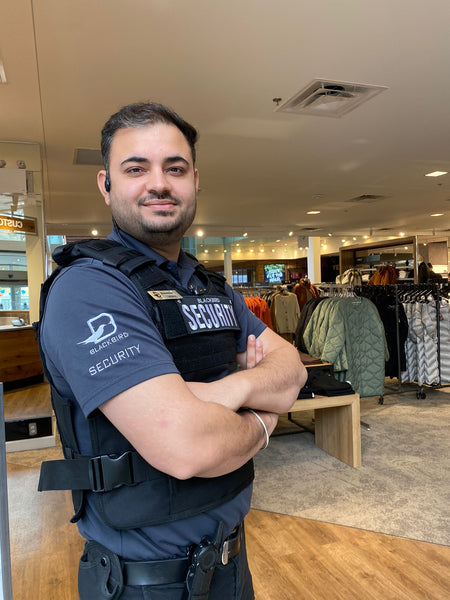
Apprehending a subject in a retail environment is a serious responsibility that requires careful judgment. Retail security guards must act with consideration for everyone in the store, including employees, customers, and even the subject themselves. Using structured protocols and prioritizing peaceful de-escalation allows for legally sound, safe, and minimally disruptive apprehensions.
At Blackbird Security, our retail security guards are trained extensively in the skills and knowledge needed to handle safe apprehensions with professionalism and care. Get in touch with us through the form below to learn how we can safeguard your business.
In addition to retail security, we provide services in the following areas: